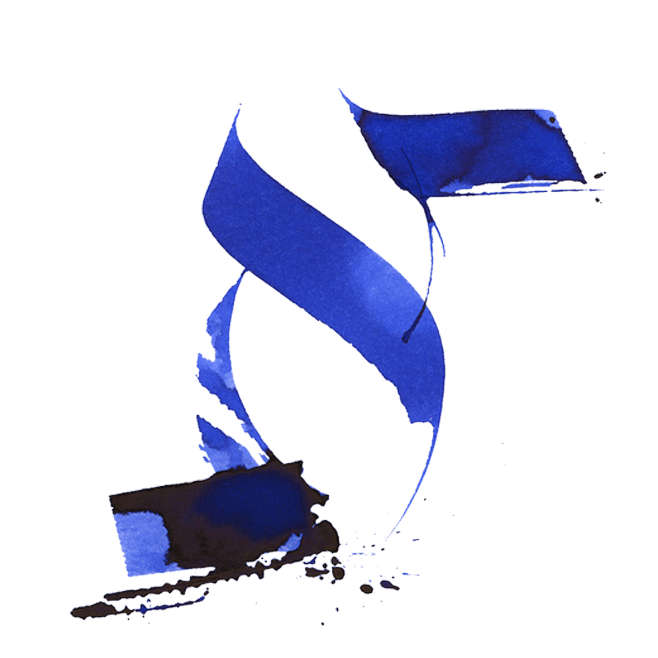
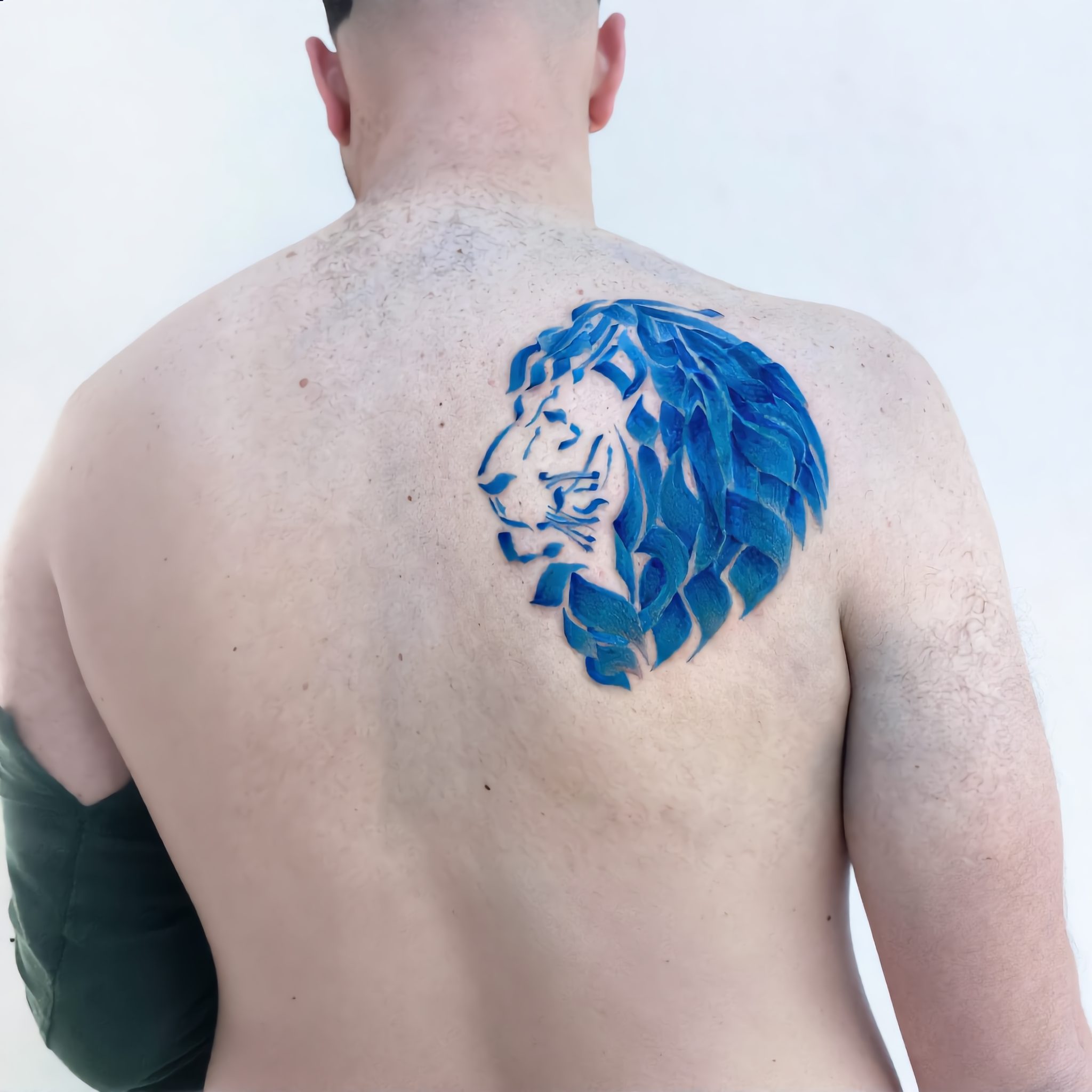
Each commission is unique and never repeated. Browse by script to see the range of hands we letter in.
{{ p.title }}
{{ p.desc }}
Text for art{{ p.hebrew }}
Tattooed by{{ p.artist }}
Year{{ p.year }}
Edited images tryout
A gallery in the making
A working set of newly relit photographs, paired with placeholder titles and wording while the real stories are gathered.
{{ p.title }}
{{ p.desc }}
Text for art{{ p.hebrew }}
Tattooed by{{ p.artist }}
Art
Selected pieces
Six commissions, each drawn once and worn by one person.
{{ p.title }}
{{ p.desc }}
{{ p.m1l }}
{{ p.m1v }}
{{ p.m2l }}
{{ p.m2v }}
Contact
Let’s begin a conversation.
We welcome conversation with anyone drawn to our work. Gabriel takes on a small number of projects each year. After an initial exchange, we determine together whether the conditions are right to proceed.
Maya Ben-Meir · Client Guide
I read every message myself, and reach out within one or two business days. For the rest of your journey with us, I'm your point of contact.
Your email app should have just opened with your message pre-filled, send it from there, and Maya will write back to {{ cEmailSafe }}{{ cPhoneNote }} within two days.
Your message is with us. Maya will write back to {{ cEmailSafe }}{{ cPhoneNote }} within two days.
The Team
The faces that guide you towards your art
A small studio of artists, storytellers and makers, between Berlin and New York, working on one story at a time.
{{ t.name }}
{{ t.role }}
{{ t.bio }}
Read more →
FAQ
A personal work of art
Every piece of art by Hebrew Tattoos begins with a story. Share your thoughts with us. Our role is to listen carefully, refine your ideas, and translate them into an original work of art created exclusively for you.
This is a thoughtful, collaborative process that requires trust, openness, and time. The following questions come up the most. Our answers will help you gain a better understanding of what to expect.
Tell us about the story, words, or idea you would like to carry with you. Together, we will shape it into an original work of art created for you, and for you alone.
לֹא כָּאן
Lo kan — "Not here." Yes, it is mirrored. Somebody tattooed this page on the wrong way round.
Error 404
Our one unproofread page
We check every letter three times before a needle touches skin. {{ attemptedPath }} is what happens when nobody checks a URL even once.
We check every letter three times before a needle touches skin. The address you followed is what happens when nobody checks a URL even once.
Spelling
Verified twice
Direction
Regrettably left to right
Removal
One click, no laser
Guides & Guidelines
How a commission unfolds
Every piece begins with a conversation and ends with letters that will be carried for a lifetime. Here is the path between the two, slow, deliberate, and drawn entirely by hand.
{{ tipLabel }}
{{ s.n }}
{{ s.title }}
{{ s.who }}
{{ para }}
What we need{{ s.need }}
Typical timeframe{{ s.timeframe }}
How we work
{{ p.t }}
{{ p.d }}
Read on, or begin.
Deeper guidance on the parts that matter most, and an open door when you’re ready to talk.
Placement →
Where on the body a word belongs.
Materials →
What we use, and why it lasts.
A studio visit →
Coming to Berlin for your piece.
Tattoo & aftercare →
Caring for the piece as it heals.
Questions, answered →
Everything else, in one place.
The Library
Our thoughts
We are artists. Writing is part of what we do. Here are our thoughts on Hebrew letters, Jewish philosophy, what it means to carry words on the body and all the other things that keep us awake at night.
{{ g.label }}
{{ g.desc }}
{{ e.title }}
{{ e.excerpt }}
Press
Words that travelled beyond the skin
A selection of the print and broadcast features our work has appeared in, a small sample, not the whole shelf.
A quiet cultural hour or two, arranged around your session.
{{ c.n }}
{{ c.name }}
{{ c.kind }}
{{ c.note }}
We take care of all logistics
You arrive at your local airport. The rest is already done.
{{ l.label }}
{{ l.value }}
{{ svClosing }}
Tattooists
The hands we trust with our art
We draw the art; these tattooists bring it to life on skin. We have worked with each of them for years, some for more than a decade, and that history matters: it means trust earned over hundreds of pieces, a shared language, and the quiet confidence that comes only from time. Each is someone we recommend without reservation, and we receive no commission, only the satisfaction of a piece done well.
Pieces tattooed by {{ activeTattooist.name }} will appear here soon.
Placement
Where it belongs on the body
Just like a tattoo shouldn’t simply be an embellishment, placement is about more than aesthetics.
{{ para }}
Each placement has its own character.
{{ z.name }}
{{ z.text }}
{{ para }}
{{ para }}
{{ placementClosing }}
THE HISTORY
Hebrew Tattoos
The tradition of Hebrew lettering stretches back thousands of years.
I began drawing letters when I was five years old.
What I didn’t know then, was that the letters were in my blood.
For millennia, Jewish communities have entrusted their stories to letters. Torah scrolls copied by hand, books carried across borders, all of it passed from one generation to the next. While every culture has its sacred symbols, ours has always had a unique relationship with language. We became known as the People of the Book.
Writing, 1986
Like many children in my community, I began learning to read and write at the age of three. But while others saw letters as tools for language, I saw something else. What I saw were shapes that contained movement and possibility, something I could play with.
Years later, I would describe letters as “little Lego pieces to do beautiful things with.” That fascination never left me.
A wall in Jerusalem.
As a child and later a teenager, I filled anything I could find with letters: scraps of paper, pieces of wood, stones, walls, and the streets of Jerusalem [only occasionally being arrested for vandalism]. Long before I knew this would become my art and my calling, letters had already become my way of expressing myself.
At eighteen, I met a man named Igor, an overweight Russian Jew who would sometimes cry in his sleep. We shared a prison cell for a few months, and with little else to do, we talked for hours. Somewhere in those conversations, Igor became convinced that my future lay in bringing Hebrew calligraphy to skin. More importantly, he managed to convince me too.
Bizzart Studios, Jerusalem.
So when I was released a few months later, the first thing I did was knock on the door of Bizzart, one of the few tattoo studio in Israel, back in 2001. A guy named Poko welcomed me in, but it took only two weeks for me to find out that tattooing wasn’t my thing. Life moved on, but I didn't forget about the idea of skin being a very special canvas.
First attempts at a website banner, 2008. Not a digital guy...
An early piece, 2010
So five years later, while living in Rotterdam, I created a website called Hebrew Tattoos. It was not a business plan or a career move. It was simply an art project born from my lifelong obsession with letters, and maybe an attempt to impress a girl I worked with.
I don’t think she ever noticed that website [or me, for that matter], but something else entirely unexpected happened: people began writing to me. They asked for artwork, and I would create each piece by hand, place it in an envelope, and mail it across the world.
What arrived with those requests was far more valuable than commissions. People brought me their stories. Stories of loss and love. Of family and faith. Of survival, grief, gratitude, identity, fear, resilience, and hope. Lots and lots of stories. Time and time again, people entrusted me with the most meaningful chapters of their lives.
My rooftop in Rotterdam, 2008.
One late afternoon in 2008, sitting on the roof of the squat I lived in, I realised something profound: the stories themselves had become my true inspiration. The artwork was simply a medium emerging from listening.
In that moment, Hebrew Tattoos was truly born.
At thirty, in 2013, I followed my inspiration to Buenos Aires, home to one of the largest Jewish communities in the world. There, I gathered a small team around a simple belief: that every person carries a story worth listening to, and that meaningful art begins with listening well.
My rooftop view in Buenos Aires
Today, that work is carried forward by a small team united by the same philosophy.
Since then, the essence of the work has remained unchanged. Today, I live in Berlin, where my team and I work with a small number of clients at a time. Together, we spend countless hours exploring memories, questions, struggles, beliefs, family histories, and dreams. We study texts, search for symbols, and look for the Hebrew words that can carry a person’s story with honesty and precision.
Out of those conversations emerge Hebrew words, and out of those words emerge artworks that become part of a person’s life story.
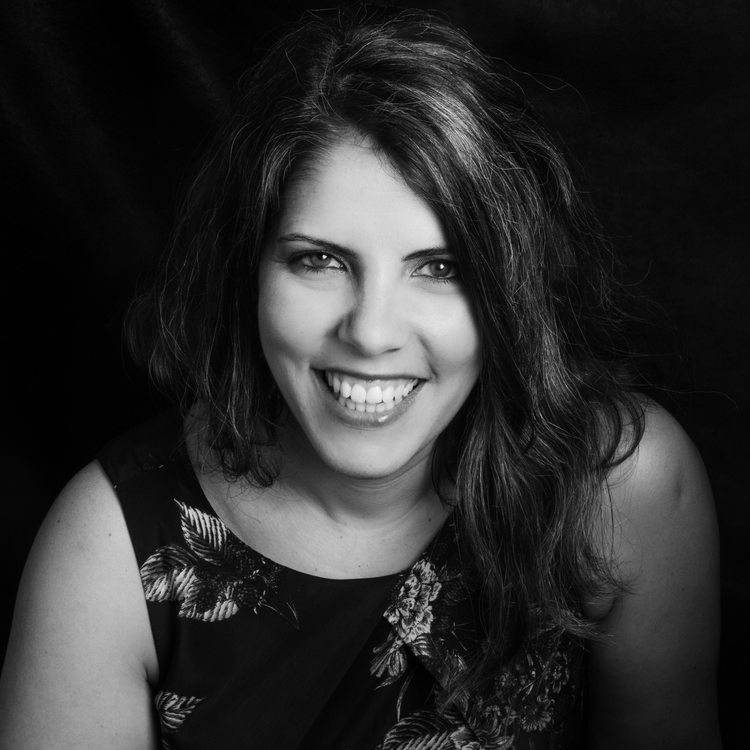
MayaView profile →Guides each client along the journey, from the first message to the finished piece.
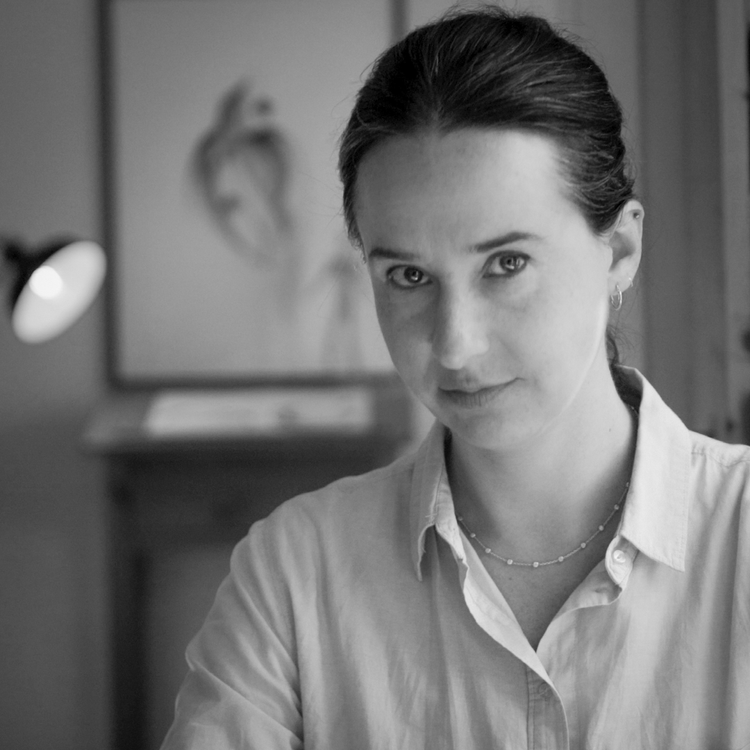
AnnaView profile →Dives deep into the storytelling of each project, uncovering the words that can carry it with honesty.
DanielView profile →Crafts models, proportional to each person, so each artwork can be shaped for the body that will carry it.
This is the way we continue the same work that began decades ago with a child staring at the shapes of Hebrew letters and imagining what they might become. The letters never stopped being little Lego pieces. The difference is that today they carry stories, memories, and meanings that people choose to take with them for the rest of their lives.
The Studio
Why We Give Ma’aser
A tzedakah box, quietly present.
Growing up in Jerusalem, I remember seeing matan ba’seter boxes everywhere. Quiet little charity boxes in shops, synagogues, schools, and private homes. Nobody made a show of putting money in them. Nobody applauded. They were simply there, a reminder that giving is meant to be woven into ordinary life.
That is still how I understand ma’aser, the Jewish practice of setting aside part of one’s income for tzedakah. It is often described as giving ten percent, but the halachic reality is more nuanced, especially in a country like Germany, where businesses already pay significant taxes that support healthcare, education, welfare, and public infrastructure.
For that reason, we do give ma’aser, but not as a simple ten percent. We try to calculate it responsibly, based on net income after taxes and legitimate business expenses, while remaining faithful to both the halachic discussion and the spirit behind it.
We do not see this as something exceptional. It is simply part of the responsibility that comes with making a living. Judaism teaches that success is never entirely ours alone. Whatever we have is entrusted to us, and part of that trust is making sure others benefit from it as well.
Like many things in Jewish life, ma’aser is not only about a number. It is about cultivating a habit of gratitude, responsibility, and quiet justice.
If you own a business and have been thinking about giving ma’aser yourself, feel free to reach out. We’d be happy to share the approach that has worked for us.
The Newsletter
Letters from the studio, every other week
No shop, no selling, just new art, the occasional essay, and word of where we are exhibiting next. Roughly twice a month.
Thank you, you’re on the list. We’ll be in touch soon.
The Letters
Why Hebrew letters
Not a font, not an alphabet borrowed for effect, a living script, drawn by hand, carrying more than the words it spells.
A letter is a form
Every Hebrew letter has its own architecture, the weight of a stroke, the breath of white space around it, the way it sits beside its neighbours. Drawn well, a single word becomes a composition. That is why each piece begins not with a typeface but with a pen: the letters are designed, not selected.
Meaning held in shape
These are the letters of prayer and memory, of names given and names remembered. They have been carried for thousands of years, through exile and return. To wear them is to wear a thread of that continuity, and to ask that it be rendered with the care the words deserve.
Why letters, and not an image
An image shows. A letter says. A verse on the skin can be read, spoken, returned to. It holds a sentence you chose, in a hand made for you alone. The work of this studio is to make that sentence beautiful, legible, and unmistakably yours.
Made once, for one person
No design leaves the studio twice. Your words, your placement, your story shape the letterform from the first sketch. What you carry is a single original, drawn for your body and no other.
Legal
Impressum
Angaben gemäß § 5 TMG
Gabriel Wolff Seelenbinderstrasse 141 12555 Berlin Germany
Umsatzsteuer-Identifikationsnummer gemäß § 27 a Umsatzsteuergesetz: DE299980969
Registereintrag
[Register court, register type and number to be added]
Verantwortlich für den Inhalt nach § 18 Abs. 2 MStV
Gabriel Wolff Seelenbinderstrasse 141 12555 Berlin Germany
EU-Streitschlichtung
Die Europäische Kommission stellt eine Plattform zur Online-Streitbeilegung (OS) bereit: https://ec.europa.eu/consumers/odr/. Unsere E-Mail-Adresse finden Sie oben.
Verbraucherstreitbeilegung
Wir sind nicht bereit oder verpflichtet, an Streitbeilegungsverfahren vor einer Verbraucherschlichtungsstelle teilzunehmen.
Internal, not linked from the site
Sitemap
Every page/route that exists right now, and whether anything on the site currently links to it. Reachable only by typing this URL directly, bookmark it. Kept up to date as pages are added or removed.
{{ r.path }}LinkedUnlinked
{{ r.label }}
{{ r.note }}
Legal
Privacy Policy
A word on how we hold what you entrust to us. Discretion is not an afterthought here. It is part of the craft.
What we keep
When you write to us, commission a piece, or subscribe to our correspondence, we may hold your name, your email address and telephone number, the details required to complete a payment, and the technical particulars (your IP address, your browser) that any visit to a website naturally leaves behind. Nothing more is asked of you than the occasion requires.
Why we keep it
This information exists to serve you: to complete a commission, to send correspondence you have asked to receive, and to end that correspondence the moment you wish it, and to understand, in the aggregate, how the studio might be presented more clearly. It is used for no other purpose.
How we protect it
Your information is held under industry-standard encryption, in secure environments accessible only to those who require it, for no longer than the purpose demands. It is not our habit to linger.
Those we work alongside
On occasion, your information is shared with the few parties who help us carry out the business itself: payment processors, shipping providers. We choose our collaborators as carefully as our materials: each is held to the same standard of care, and to the data protection law that governs it.
Cookies
Small technical files allow this site to recognise you on return, to remember your preferences, and to show you what is relevant rather than what is not. They may be disabled at any time through your browser, though the experience is quietly diminished without them.
Your rights
You may ask, at any time, what we hold on your behalf. You may ask that an error be corrected. You may ask that your information be deleted, and it will be, save where the law requires us to retain it, for accounting or similarly serious reasons. And you may withdraw from any correspondence you once welcomed, without explanation required.
Beyond one border
Should you write to us from outside Germany, your information may be transferred to our servers here, or to those of the providers who assist us. Wherever it travels, it remains governed by this policy.
Children
We do not knowingly collect information from anyone under the age of thirteen, or older where local law requires. Should a parent discover otherwise, we ask only to be told.
Should this change
This policy may be revised from time to time. Where the change is meaningful, we will say so.
A word to reach us
For any question concerning this policy, or to exercise the rights described above, write to us directly.